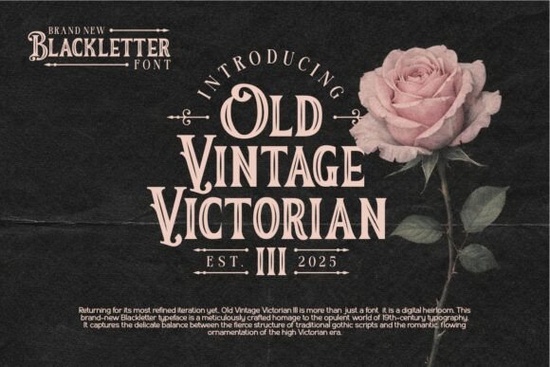
If you’ve been searching for a typeface that feels like it stepped out of a 19th-century apothecary or grand ballroom, the Old Vintage Victorian III Font might be exactly what your next project needs. It’s not just another decorative serif it’s built with the ornate detailing and bold structure that defined typography during the height of the Victorian era. Whether you’re designing a whiskey label, branding a café with vintage charm, or creating wall art for a client who loves historical aesthetics, this font brings authenticity without feeling costume-y.
What makes this font stand out is how intentionally it leans into its era. The high contrast between thick and thin strokes, the elaborate swashes, and those strong, bracketed serifs all work together to create visual impact especially at larger sizes. You’ll notice right away that it’s meant to be seen, not just read. That’s why it works so well on packaging, posters, and signage where you want something to catch the eye and hold attention.
Where does this font fit best in real-world projects?
Here are some practical uses we’ve seen designers love:
- Distillery and brewery labels The weight and ornamentation give off that “handcrafted since 1892” vibe even if your brand launched last Tuesday.
- Vintage apparel designs Think retro tees, embroidered patches, or tote bags with a nostalgic twist.
- Café and restaurant menus or chalkboard signs Especially if your space has exposed brick, Edison bulbs, or antique mirrors.
- Wedding invitations or event posters For clients who want elegance with personality, not just script fonts everyone else is using.
- Book covers or magazine feature headlines If you’re working on period pieces or editorial layouts that need a touch of drama.
It pairs surprisingly well with simpler sans-serifs or clean scripts. Try setting body text in something neutral like Montserrat or Lora, then let Old Vintage Victorian III take center stage as your headline or logo font. You don’t need to over-style it often, less styling lets the details shine more.
How does it compare to other vintage display fonts?
If you’ve browsed Creative Fabrica’s display fonts before, you might have come across Picky Retro, which leans more playful and mid-century, or The Pickles House, which has a hand-drawn, quirky energy. Those are great for different moods but if you need something with gravitas and architectural detail, Old Vintage Victorian III holds its own.
For editorial or fashion-forward layouts, you might also consider Magazine Design Font for its sleek modern-vintage blend, or Varsity Sport Army if you’re mixing eras for contrast. But none of those carry the same level of ornamental craftsmanship as this one.
Is it easy to use for non-designers?
Absolutely. The font comes in standard OTF and TTF formats, so it installs like any other on Mac or PC. Most design software from Canva to Adobe Illustrator will recognize it without issue. There’s no complicated glyph panel needed to access the swashes; they’re built into alternate characters or stylistic sets depending on your program.
One tip: because of its density and detail, avoid using it below 18pt unless you’re going for an intentional “aged print” effect. At small sizes, some of the finer lines can blur together, especially on lower-resolution prints or screens.
Does it support multiple languages?
Yes it includes extended Latin characters, so you’re covered for Western European languages like French, Spanish, German, and Portuguese. That’s helpful if you’re creating bilingual packaging or marketing materials for international audiences.
You can check out how it looks in context over at Old Vintage Victorian III on Creative Fabrica, where you’ll also find user previews and licensing details for commercial use.
What should I keep in mind before downloading?
This is a display font, not a text font. Don’t try to set paragraphs with it save it for titles, logos, badges, or short phrases. Also, while it’s labeled “Est. 2025,” that’s part of the design fiction it’s newly created but styled to feel authentically old. No actual 19th-century type foundries were involved (though we like to imagine them nodding in approval).
If you’re pairing it with photos or textures, go for muted tones, grainy papers, or sepia overlays. Bright neons or flat vector graphics will clash unless you’re deliberately going for irony.
Quick checklist before you start:
- Use large sizes 24pt minimum for readability, 48pt+ for full impact.
- Pair with simple fonts Let this one be the star; don’t compete with other ornate typefaces.
- Test print output Some printers struggle with fine hairlines; do a test run if quality matters.
- Check your license Make sure it covers your intended use (POD, merchandise, etc.).
- Explore alternates OpenType features may include bonus swashes or ligatures worth digging into.
And if you’re still browsing, don’t miss this dedicated page for more examples and real-user mockups. Sometimes seeing it on a mock bottle label or embroidered cap is all you need to know it’s the right pick.
Learn More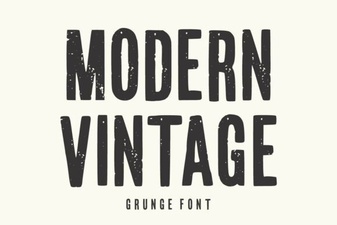 Modern Vintage Fonts for Creative Designers
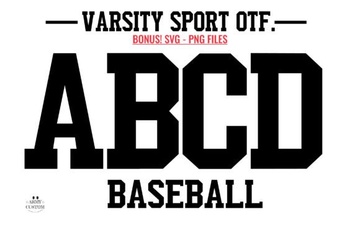 Varsity Sport Army Font for Sports Design Projects
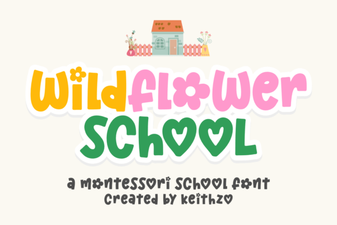 Wildflower School: a Free Creative Font for Educators
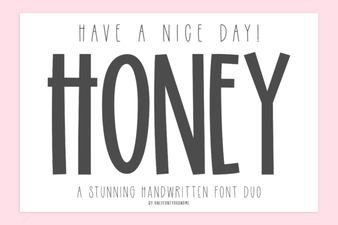 Have a Nice Day Honey Font: Download & Free Use Guide
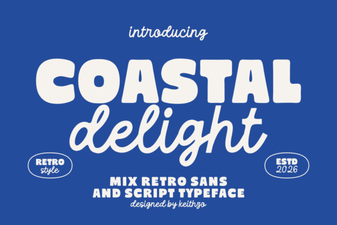 Coastal Delight Font: Elegance for Seaside Designs
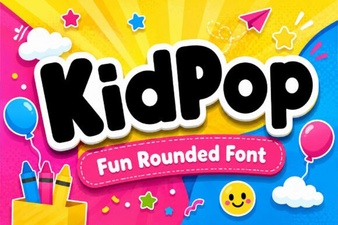 Kidpop Font: Creative Projects for Kids